Two Bucks of Pure America: Why the Humble Deuce Bet Refuses to Die
There's a moment every American knows. You're at the counter — a racetrack window in Kentucky, a gas station in Ohio, a sportsbook app at 1:47 a.m. in your recliner — and you have exactly two dollars you've mentally already spent. The question isn't whether you can afford the bet. The question is: what does hope cost today?
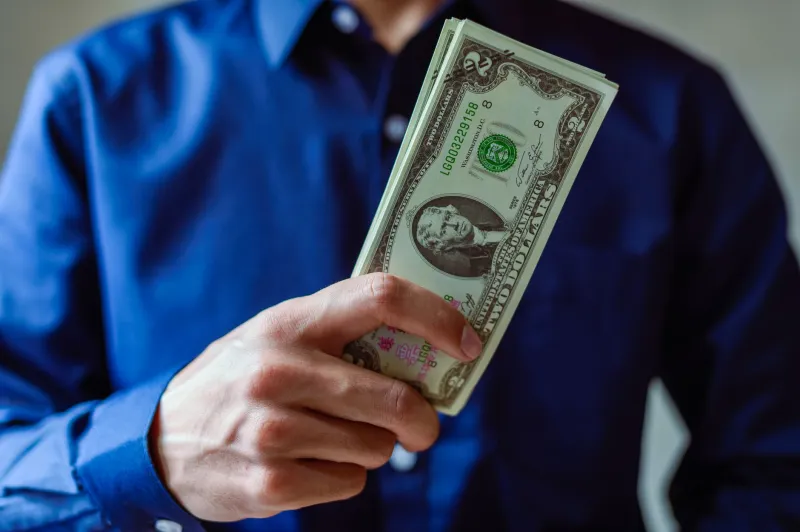
Two dollars. It always costs two dollars.
The Last Honest Price Tag
Somewhere along the way, American gambling decided that small was embarrassing. Minimum bets crept up. Parlay builders whispered about "just adding one more leg." Casino floors redesigned themselves around the $25 table. Somewhere in that shuffle, the two-dollar bet became the cockroach of wagering — unglamorous, indestructible, and quietly outliving everything fancier around it.
And honestly? That's the most Up2U thing in existence. The odds are up to you — and sometimes "you" is a person with a five and a dream, asking for a deuce on the 7 horse because the name reminded them of their ex's dog.
That's not degeneracy. That's folklore.
What Two Dollars Actually Buys You
Let's do the math nobody does. A $2 bet at even money pays you $4 and, more importantly, pays you something else: roughly four hours of having a stake in the outcome. That's a better entertainment-per-dollar ratio than a movie ticket, a streaming subscription, or whatever it costs to park near an NFL stadium these days.
I talked to Ray, 71, who has bet two dollars on the Kentucky Derby every single year since 1979. "I've won it twice," he told me, beaming like the second win was last week. "Lost forty-four years. Best money I never missed."
Read that again. Best money I never missed. There's an entire philosophy of bankroll management hiding in that sentence, and no loss-chasing tutorial ever written can improve on it. The $2 bet is designed to be losable. It's a bet with an exit strategy baked in.
The Micro-Stake Hall of Fame
The two-dollar wager has a resume:
- The lottery scratch-off era. Half the country's first gambling experience was two bucks and a coin.
- The racetrack $2 win-place-show. The literal standard unit of horse racing for a century. The tote board doesn't even know another number.
- The office Super Bowl square. Twenty-five cents a square, sure, but the pot? Two-dollar bills in a Dunkin' cup.
- Your uncle's "one dollar on the Bills, for the Bills" — a bet placed so the game hurts in a manageable, tax-deductible way.
These aren't bets in the financial sense. They're participation trophies you have to earn. They're the entry fee for caring.
Why the Big Books Should Be Jealous
Here's the uncomfortable truth for the max-bet crowd: the emotional return on a $2 ticket is wildly out of proportion to the risk. A $500 parlay sweating on a Sunday night field goal produces ulcers. A $2 parlay sweating on the same field goal produces joy — pure, uncut, consequence-free rooting interest. You're screaming at the television either way. One of you is screaming with a safety net.
The $2 bettor has discovered what Wall Street calls asymmetric upside and what the rest of us call "not ruining my week." Worst case, you're out the price of a gas station coffee. Best case, you're telling a story at Thanksgiving for the next decade about the time two dollars became two hundred.
A Modest Proposal
I'm not saying bet small forever. The odds are up to you, and if your bankroll says otherwise, listen to your bankroll — it's the only handicapper that never lies. But I am saying we should stop treating the deuce as a rounding error.
Keep one $2 bet alive. A season-long futures ticket. A Derby horse picked by name. Something with no strategic value and maximum sentimental value. Frame it if it wins. Laugh if it loses. Either way, you've spent two dollars on the cheapest form of hope still legally sold in America.
Ray's got his Derby ticket already. Do you?