Broke by Thursday, Baller by Friday: The Strange Economics of the Pre-Payday Bet
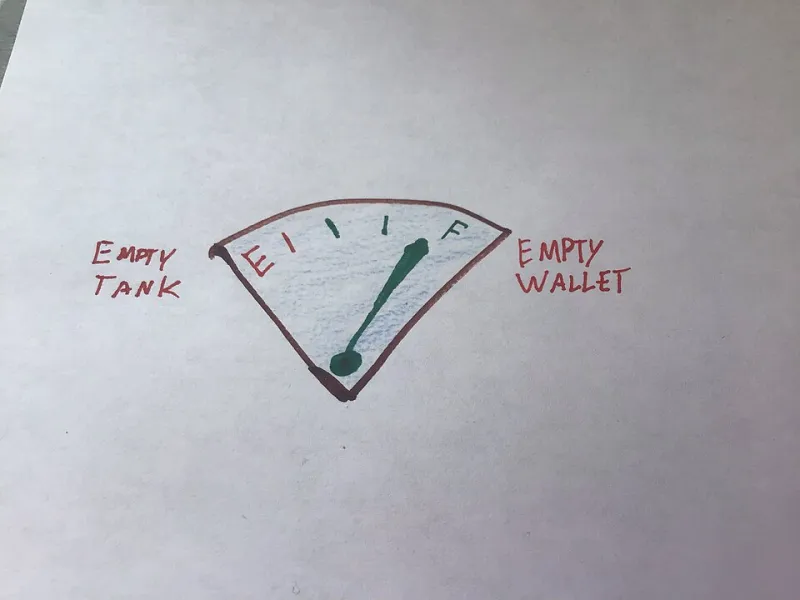
Photo: BigBruiser, CC BY-SA 4.0, via Wikimedia Commons
There's a moment every American bettor knows intimately. It's Wednesday night. Your checking account has the approximate balance of a vending machine. And yet, somehow, your thumb is hovering over a six-leg parlay with the confidence of a man who has never once bounced a rent check.
Welcome to the payday paradox — the weird, well-documented, deeply human phenomenon of betting biggest when your bank is emptiest.
The Data Doesn't Lie (But It Does Judge You)
Ask any sportsbook operator (off the record, after a couple of beers) and they'll tell you the same thing: betting volume doesn't peak when people have money. It peaks right before they get it.
The pattern is almost beautiful in its consistency. Deposits tick up midweek. Ticket sizes get weirder — fewer straight bets, more lottery-ticket parlays, more 'what the heck' wagers on Hungarian second-division table tennis at 2 a.m. Then Friday hits, direct deposit lands, and suddenly everyone's back to sober $25 moneyline bets like responsible adults.
In other words: when the account is fat, the bets are boring. When the account is starving, the bets get creative. That's not a coincidence. That's psychology with a betting slip attached.
Scarcity Makes You Stupid (Temporarily)
Behavioral economists have a term for what happens to your decision-making when resources get tight: scarcity mindset. The short version is that when you feel broke, your brain zooms in on the fastest available exit ramp from being broke. Long-term planning goes out the window. The $40-to-$400 fantasy stops sounding like a fantasy and starts sounding like a plan.
It's the same wiring that makes people buy scratch-offs at the gas station on the 28th of the month. The odds don't change. Your relationship to them does. A parlay that would've been a laughable longshot on payday becomes, in the hazy light of a pre-payday Wednesday, 'basically free money if the Jets cover.'
The Jets, for the record, have never once been free money. But scarcity mindset doesn't do due diligence.
The Poverty Week Patriots
Here's the fun part, though: a certain breed of bettor has stopped fighting this cycle and started exploiting it.
Meet the 'poverty week' crew — a loose fraternity of bettors who treat the last week of the pay cycle not as a danger zone but as a forced sabbatical. Their system is almost aggressively simple: the week before payday, betting is either banned entirely or restricted to a tiny, pre-committed 'fun fund' that's already been set aside on payday itself.
One bettor I spoke with — a nurse in Ohio who asked to go by 'Double Dime Deb' — described it like this: 'Payday, I move my bankroll, my bills money, and forty bucks of mad money into separate spots. By the time the mad money's gone, usually around the following Tuesday, I'm done. Pre-payday week, I'm a spectator. I scout. I build tickets I don't bet. Then Friday morning, I fire.'
The results? Deb claims her win rate didn't change much, but her bankroll stopped flatlining. The difference wasn't picking better — it was refusing to make desperate bets with desperate money. 'The worst bets of my life all had one thing in common,' she says. 'I needed them to hit.'
Another convert, a long-haul driver out of Texas, put it more bluntly: 'Pre-payday me is a idiot. So I don't let pre-payday me hold the phone.'
Flip the Calendar, Keep the Money
The deeper lesson here isn't really about payday at all. It's about sequencing. Most bettors fund their action with whatever's left over after life happens — which, most weeks, is nothing. The poverty week crowd flips that: the bankroll gets funded first, at the moment of maximum financial clarity (payday), and the betting week runs on a schedule the bettor chose, not one their checking account chose for them.
It's the same logic as paying yourself first, except the thing you're paying is a hobby that occasionally pays you back.
Sidebar: The Last $40 Rules
If you're reading this on a Tuesday with exactly two twenties and a dream, here are the house rules for betting responsibly when you're down to your final $40:
- Decide it's entertainment money, out loud. Say it. 'This is forty dollars of fun.' If you can't say it, don't bet it.
- One ticket. Not four. Spreading $40 across five bets isn't diversification; it's five separate ways to be annoyed.
- No parlays over three legs. Yes, we know. We said what we said.
- Nothing you need to win. If the outcome of a bet changes whether you make rent, it's not a bet — it's a problem with a spread.
- No chasing a loss with the other $20. The second twenty exists to be gas money if the first twenty dies. Honor it.
- Cash out the app when you're done. Physically remove the temptation. Pre-payday you cannot be trusted with a funded account at midnight, and we both know it.
The bets, much like your paycheck, are up to you. Just maybe let Friday-you make them.