The Carpet Knows Where You're Going: Reading a Casino Floor Like a Local
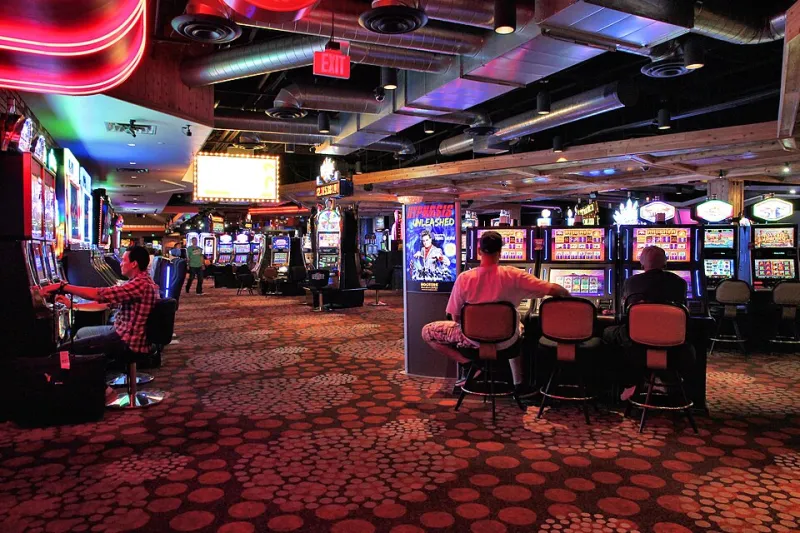
Photo: Marek Ślusarczyk (Tupungato) Photo portfolio, CC BY 3.0, via Wikimedia Commons
You walk through the doors with a number in your head. Two hundred dollars. Maybe three. A reasonable number, a number you and your checking account agreed on in the parking garage.
Ninety minutes later the number is gone, and in its place is a vague memory of a cocktail waitress, a slot machine shaped like a wheel of fortune, and the strong suspicion that you were steered here by a rug.
You were. Not maliciously, not by a guy in a vest — by architecture. Casino floors are the most carefully written rooms in America, and you are the character who wanders off the plot.
You Are the Protagonist (That's the Problem)
Every design decision on a casino floor assumes one thing: that a human being in motion will take the path of least resistance and the path of most stimulation. That's not a conspiracy theory, it's just retail. Grocery stores put milk in the back so you walk past everything else. Casinos put the cashier in the back so you walk past everything else with worse intentions.
The difference is that a grocery store only wants your twenty minutes. A casino wants your twenty minutes plus your sense of time. So the room is built without windows, without clocks, without any natural cue that a Tuesday afternoon is becoming a Tuesday evening. That's not a trick exactly. It's a closed narrative. You are inside a story that has no chapter breaks, and chapter breaks are how people remember to leave.
The Path of Least Resistance Is Paved in Patterned Wool
Look down. That carpet — the aggressive one, the one with the swooping shapes in burgundy and gold — is doing labor. Busy patterns hide stains, yes, but they also do something subtler: they make it hard to judge distance and speed. A flat, calm floor tells you how far you've walked. A loud one keeps you pleasantly disoriented, which is exactly the mental state in which a person thinks 'sure, one more.'
Same story with the layout. Slot machines cluster near the entrance, because slots are the cheapest thing to play and the most visually rewarding — lights, dings, animations. They are the on-ramp. Table games sit further in, usually behind a low barrier or a raised platform, because table games require a certain commitment and a certain confidence. The room escalates your involvement without ever asking permission.
None of this is coercion. You can walk past all of it. But there's a difference between 'I chose this' and 'this was the only thing in front of me,' and good floor design blurs that line on purpose.
Sound as a Pacemaker
The music is not background. It's tempo. Casinos run uptempo during peak hours because faster music correlates with faster play, and faster play correlates with more decisions per hour, and more decisions per hour is the entire business model. The dings and chimes from the machines are pitched in a narrow, pleasant register — they are engineered to read as 'someone is winning,' never as 'someone is losing.'
Try this sometime: stand still and listen for thirty seconds without looking at anything. You'll notice there's no clock tick, no closing bell, nothing that says time is passing. The soundscape is a loop. Loops don't end. That's the point.
Anatomy of a Deliberate Walk
Here's the practical part. A casino is navigable if you treat it like a hike rather than a current.
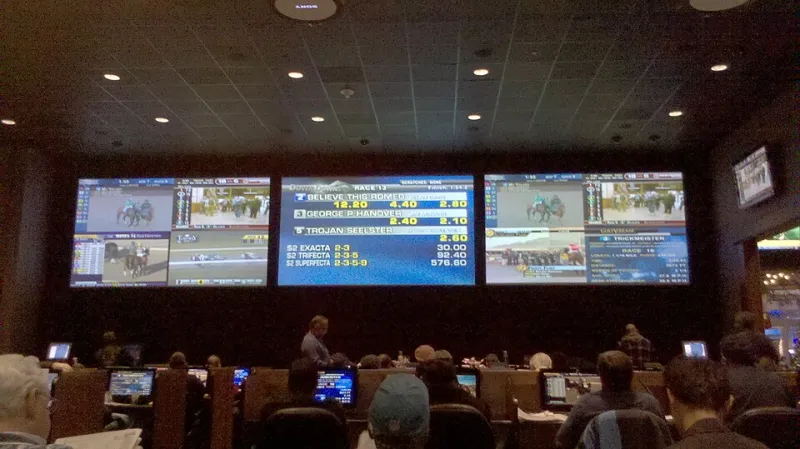
Pick your landmarks before you move. The sportsbook is usually the most useful one — big screens, open seating, and a natural gathering point. Note where it is relative to the exit. Note where the restrooms are. Those three points give you a triangle, and a triangle is a map.
Decide the session before you sit down. Not the spend — the session. 'I'm playing blackjack for forty-five minutes, then I'm getting a sandwich.' Time-boxing beats bankroll-boxing, because the floor is designed to erase the first one.
Watch where the aisles push you. Every casino has a main artery, and every main artery runs past something profitable. If you notice yourself being funneled, that's your cue to take the side path on purpose. Taking the weird corridor is not rebellion, it's navigation.
Use the sportsbook as a reset room. Sportsbooks are the one corner of most floors built around waiting and watching rather than continuous action. Sitting there for ten minutes with a bet already placed is the closest thing to a chapter break the building offers. Take it.
Convenience or Coercion? The Tell
Here's a cleaner way to sort the two. Convenience makes the thing you already decided to do easier. Coercion makes the thing you didn't decide to do feel like the natural next step.
An ATM near the sportsbook? Convenience. An ATM inside the poker room, thirteen feet from your seat, with a fee that would make an airport kiosk blush? That's the building making a suggestion.
A cocktail server who remembers your drink? Lovely. Comps that arrive exactly when your stack is shrinking? That's a pace-setter, not a gift — the free coffee has an agenda, and the agenda is another hour.
Neither of those makes anybody a villain. But knowing the difference is the whole game. The floor is not going to tell you which one it's doing.
The Exit Is a Character Too
One last detail worth noticing: exits are almost never where you came in, and they're almost never lit like a celebration. Follow the carpet to the door and the pattern goes quiet. The lights calm down. Somebody finally thought about clocks.
That shift is your cue, and it's the one piece of the design working in your favor. The room gets boring near the door on purpose — boring is how a casino says goodbye.
So leave on the boring side, with the number you walked in with still mostly intact. Betting is supposed to be up to you. The carpet has opinions, but it doesn't get a vote.