Your Bet Builder Is Not a Self-Portrait: A Workshop in Parlay Restraint
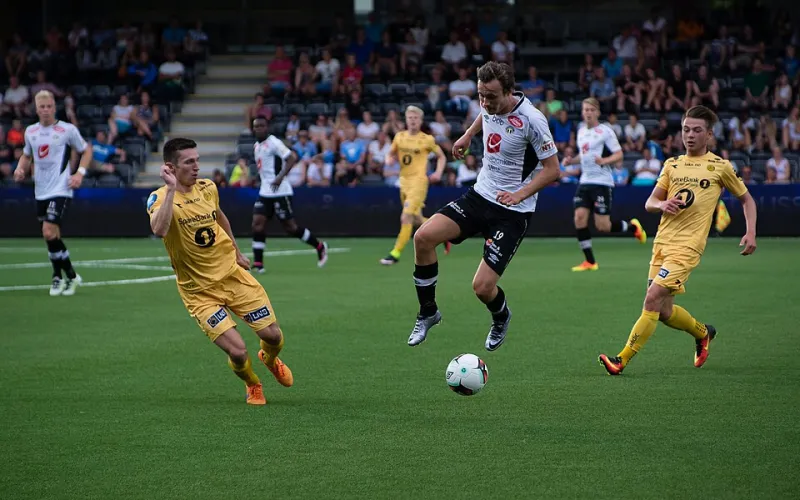
Photo: Bjørn Erik Pedersen, CC BY-SA 4.0, via Wikimedia Commons
There is a specific moment in every bet-builder session when the tool stops being a tool and starts being a personality. You begin with the moneyline. Then you add the spread, because it feels naked without it. Then the over. Then a quarterback rushing prop, then the tight end's receptions, then — because it's 11:47 on a Sunday morning and you are clearly a savant — a leg on the kicker.
Eight legs. Five bucks. A potential payout that reads like a Social Security number.
That is not handicapping. That is scrapbooking. And while scrapbooking is a lovely hobby, it has never once covered a bar tab.
The Toolbox vs. the Tool
Let's give the bet builder its due. A custom ticket is genuinely one of the better things to happen to US sports betting. You can finally express the exact read you have — 'this game is going to be ugly, low-scoring, and the road team's run game will grind it out' — instead of choosing between three moneylines and hoping. That's the 'up to you' promise in its purest form: the odds are yours to arrange.
But a power drill does not make you a carpenter, and a bet builder does not make you an oddsmaker. The same-game parlay's entire appeal is the illusion of authorship. You assemble the legs, you set the order, you press the button. It feels like a thesis statement. What it usually is, though, is a group project where every member is the same person.
Correlation Is Not a Footnote
Here's the part the slip never puts in big letters: same-game legs are frequently not independent. They breathe the same air.
Take a quarterback's passing yards over paired with his team's moneyline. If he throws for 310, his team probably won. That's a friendly correlation — the legs hold hands and skip together. Now take that same passing-yards over and pair it with the opponent's moneyline. That's a fight in a phone booth. Same game, two ideas that actively despise each other.
Then the sneaky one: a receiver's receptions over stacked with the team's rushing yards over. Coaches only have so many snaps. Every handoff is a target that didn't happen. You didn't build a ticket; you built a diet.
Correlation, in other words, cuts both ways. The books know it. That's why same-game pricing isn't simply the multiplication you'd get from separate straight bets — the house adjusts for how the legs move together. Sometimes that adjustment is generous. Sometimes it quietly eats you alive, particularly on positively correlated combinations where the payout shrinks faster than your enthusiasm.
Three Questions Before You Tap Add
Before any leg goes onto a custom ticket, run it through this gauntlet.
First: can I defend this leg on its own? If the answer is no — if the leg only exists because the ticket looked lonely — delete it. Every leg should be able to survive as a straight bet and hold up in conversation.
Second: does this leg help or hurt the others? Not just 'is it in the same game,' but 'does this event make my other events more likely, or does it steal from them?' A parlay of things that share a cause is a bet. A parlay of things competing for the same touches is a lottery ticket with extra steps.
Third: would I still like this ticket at half the payout? If the number is the only reason you're in, you're not betting the game — you're betting the decimal point.
Building One on Purpose
Example time. You like a Sunday NFC North game to be a rock fight: two solid defenses, a banged-up offensive line on one side, wind in the forecast. Instead of a seven-leg monument, you build four legs that all tell one story.
- Under on the game total
- The favorite's running back over on carries
- The opposing quarterback under on passing yards
- Either team's kicker over on field goals
Every leg is a slightly different dialect of the same sentence: nobody's moving the ball, so here come the field goals. The legs reinforce each other, the ticket has a thesis, and — critically — you can explain it out loud to a friend without losing the thread halfway through.
That is the difference between a bet and a mood board.
When the Straight Bet Whips the Builder
There's no trophy for parlaying. If your read is one thing — 'this team covers' — then bet one thing. The straight bet pays less and wins more often, a trade most bettors make peace with somewhere around their third losing eight-legger.
The bet builder shines in exactly three situations: when your read requires multiple events to be true at once; when the individual prices are so short that a small parlay is the only route to a reasonable return; and when a book's same-game pricing is unusually friendly on one specific combination. That last one is real but rare, which is precisely why it's worth checking instead of assuming.
One more piece of shop craft: shop the same ticket across two or three books before you commit. Same-game pricing varies more than straight-bet pricing does, and a few percentage points of payout on a correlated ticket is not a rounding error — it's the whole edge.
Bet Your Way, Not Every Way
The slogan on the door is 'up to you bet,' which is a lovely idea and a slightly dangerous one. Every option you're handed is not a suggestion. The builder offers forty legs because forty legs sell, not because forty legs are wise.
So use the tool the way you'd use a table saw: with a plan, a guard, and full awareness that it can take a finger. Build tickets that say one thing. Keep the leg count below the number of people you'd trust to housesit. And when the payout starts looking like a phone number, that isn't a signal from the gambling gods — it's a signal that you've started decorating.
The odds are up to you. Try to make them say something.